Program Management · Security Awareness & Human Risk · AI Enablement · Learning Architecture
I find the learning gap, design to close it, and build systems that hold up after launch.
Lead Program Manager · Security Enablement · Learning Architecture
I work backward from the end goal, move fast, and iterate in real time, building learning strategies that drive impact now and scale from there.
I'm a Lead Program Manager and Learning Architect who blends business logic with systems design to solve capability gaps at the root.
I'm especially energized by what agents and automation can take off a program manager's plate. Intake, audits, tagging, status reporting, the parts that eat a week and teach you nothing. I'd rather spend that week on architecture, skill-building strategy, and the security awareness problems that actually need a person thinking about them.
"Common sense over excessive complexity."— Me, the professional GSD-er
This is a working example of how I think about intake as a learning program manager. Answer 8 questions and the tool generates two reports instantly. The requester gets a plain-language summary with a clear recommended approach. The learning team gets a full diagnostic with risk flags, scope implications, and talking points for the first meeting. The logic behind it reflects how I approach every new request: find the real driver first, flag the risks early, and define success before design begins.
A plain-language summary with a recommended approach and clear next steps ready to act on immediately.
A full diagnostic covering solution rationale, risk flags, missing information, and talking points for kickoff.
Built to show how intake output can trigger a project workflow in a tool like Asana and seed the first milestone automatically.
These are the patterns behind my best work: start with the destination, dig under the surface, keep strategy tied to real business goals, and build systems that scale without losing clarity.
I do not start with content. I start with the decision, capability, behavior, or business risk that needs to change. Once the destination is clear, the design gets sharper, faster, and more useful.
If people are missing the mark, I want to know why. I look for root cause process friction, knowledge gaps, incentives, tool confusion, and role ambiguity so the solution addresses the real problem instead of the loudest symptom.
Learning strategy has to support the end goal, whether that is stronger readiness, lower risk, faster onboarding, cleaner audit performance, or internal mobility. I build measurement in from the start not bolted on at the end when someone asks how it went.
I think in repeatable structures: pathways, templates, governance, content libraries, knowledge hubs, and release rhythms. That is how teams stop reinventing the wheel and start building capability that lasts.
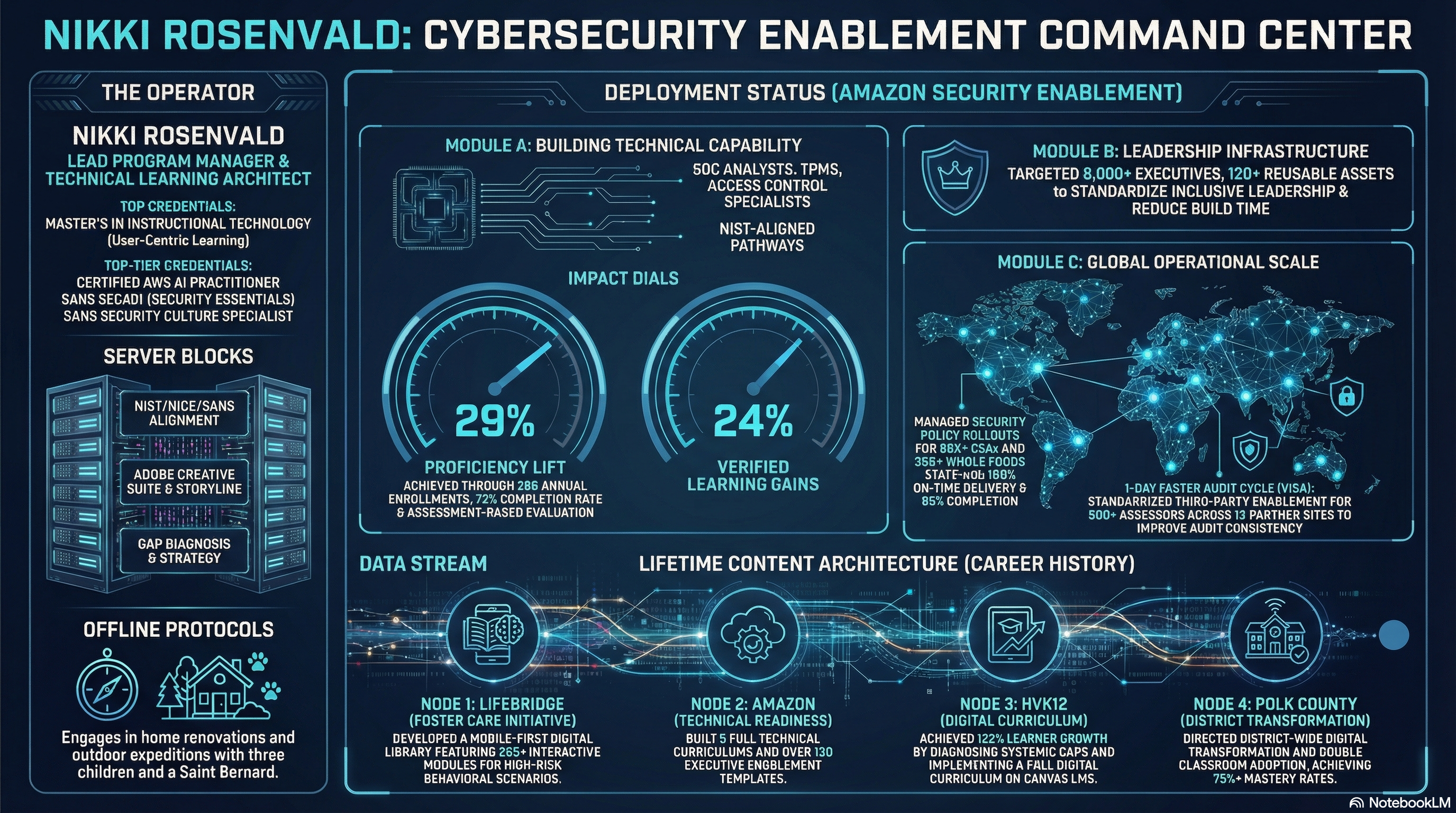
From enterprise-scale security compliance to youth-focused microlearning, this is the impact the work produced in the real world.
Learners reached through annual security policy training across corporate and retail, localized into 14 languages.
Documented gains in security, privacy, and TPM skills through assessments and scenario-based validations.
Role-based pathways built across security and technical programs, each combining coursework, mentoring, and capstones.
Built third-party enablement from zero and helped standardize findings language to reduce audit cycle time.
Created a reusable executive enablement library, coded the wiki hub, and reduced build time with templates.
Designed and launched a mobile-first digital library for at-risk teens in foster care across Georgia.
Enterprise work is largely confidential by policy, and my current engagement is active under confidentiality. What I can walk through live: the strategic questions I started with, the analysis that shaped the design, the architecture decisions and tradeoffs I navigated, and the outcomes the programs produced.
Enterprise LMS Migration & AI Enablement · Regulated Financial Services
A regulated financial services organization was moving its entire learning function to a new enterprise platform. The technical migration was the visible problem. The real one was quieter: a compliance-critical course serving 3,000+ learners across every audience segment had to survive the move without losing integrity, and 140+ administrators had to arrive on the new platform actually able to use it, not merely credentialed on it.
My work sat at the architecture layer. Before any content moved, I ran a QC audit of the existing catalog against the new platform's standards and built the consolidation logic that determined what carried forward, what merged, what was rebuilt, and what should not survive the migration at all. That audit became the roadmap. Content decisions stopped being negotiated case by case and started following a documented standard.
The compliance course rebuild was the highest-stakes piece. Re-architecting a course that regulated audiences depend on means the risk is not a broken link, it is a learner who completes training and still gets the requirement wrong. I rebuilt the curriculum structure for the new platform while holding compliance integrity fixed as the non-negotiable constraint.
For the administrator population, I designed an early adopter champions program spanning 12 cohorts. The strategic bet was that 140 administrators trained by broadcast produces 140 people who have seen a demo, while 140 administrators moved through a structured champions program produces advocates who carry the platform into their own teams. Running underneath all of it was the AI features rollout, with enablement built during sandbox pilot so adoption barriers surfaced before production rather than after.
This engagement is active and under confidentiality. What I can walk through live is the architecture, the decision logic, and the tradeoffs I navigated. The thinking is fully shareable even when the artifacts are not.
Global Security Enablement · Amazon
I helped evolve a large-scale compliance requirement into a more structured enablement system with stronger governance, more consistent learner experience, and better visibility into risk patterns.
My role sat at the intersection of strategy, design, and operations: localization at scale, Cornerstone to Amazon Learn transition support, Whole Foods adaptation, and targeted awareness campaigns based on audit and repeat-violation patterns.
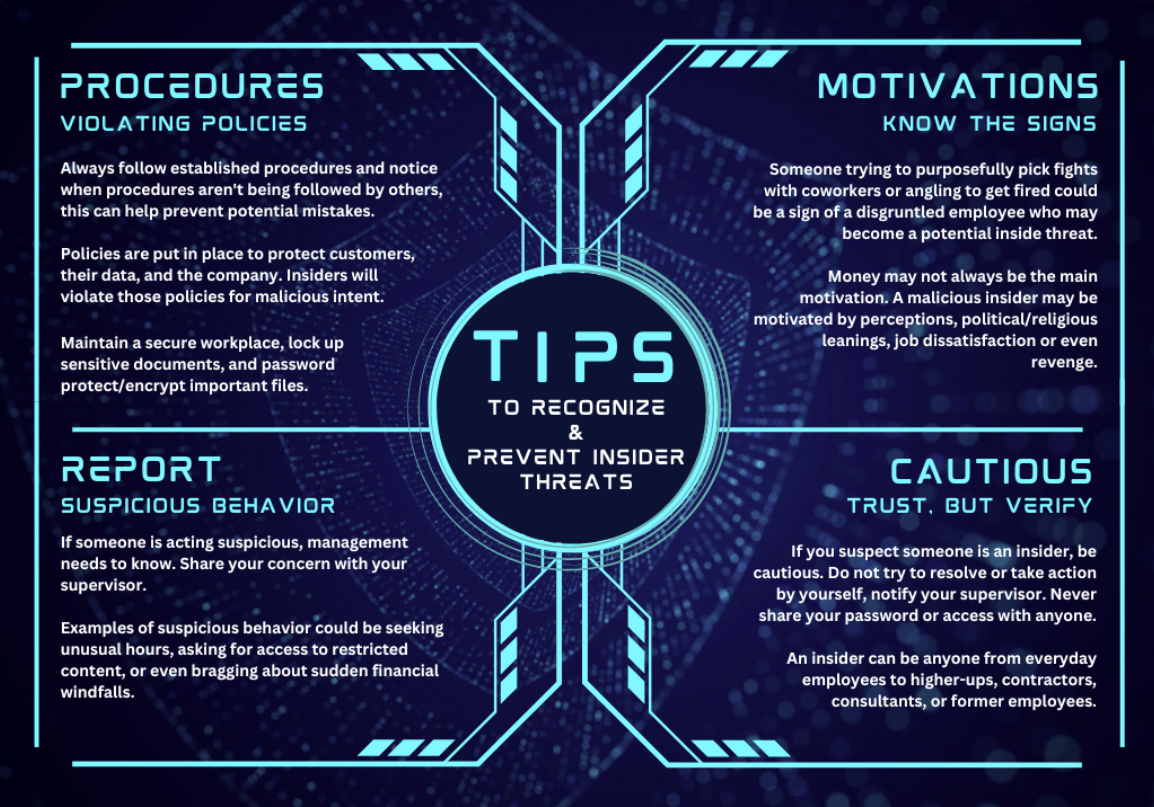
A key part of this work was translating raw audit and repeat-violation data into targeted campaign design- identifying which behaviors were actually at risk, which audiences needed different messaging, and where policy knowledge gaps were driving compliance failures versus access or process issues. That diagnostic step is what separated this program from checkbox compliance.
Security Career Pathways · Amazon SETA
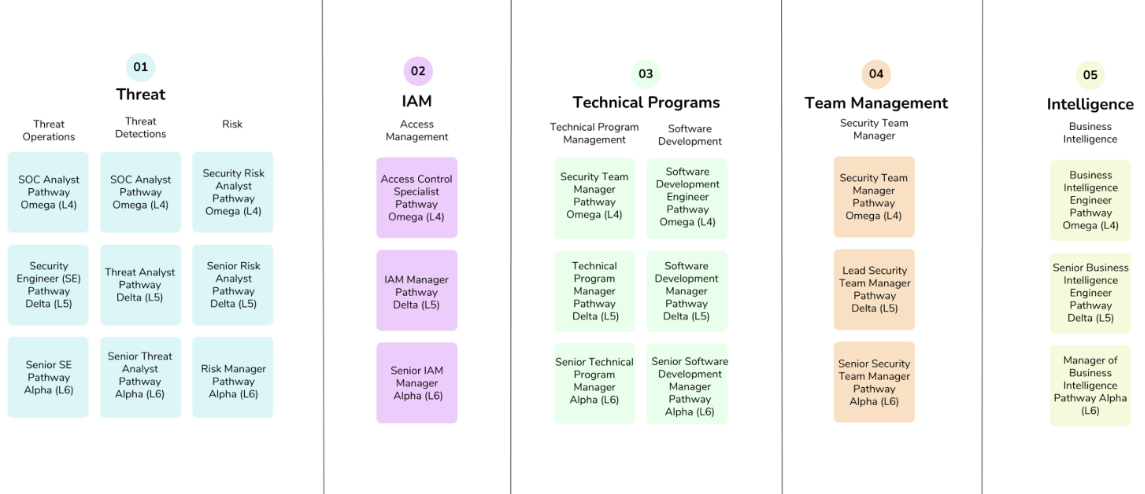
Amazon's security org had talented people who wanted to grow into more technical roles—but no structured system internally to help them get there. There was no shared language for readiness, no clear progression logic, and no way to validate whether someone was actually prepared for a role transition.
I led the end-to-end design and deployment of five role-based career pathways, working directly with senior security leaders and SMEs across Threat, IAM, Technical Programs, Team Management, and Intelligence to define what competency actually looked like at each level. That meant facilitating structured working sessions to surface tacit knowledge and stress-test it against real operational scenarios, translating it into learning objectives mapped to NIST, NICE, and SANS frameworks, and building a curriculum that combined structured coursework, job shadowing, mentoring relationships, and scenario-based capstone experiences.
The capstones were designed specifically to mirror real operational decisions—so leaders could use them as a readiness signal, not just a completion checkbox. Every pathway was built to be repeatable, maintainable, and owned by the business after launch.
Advantage Experience · Amazon
Advantage Experience was an internal professional development initiative for roughly 8,000 senior employees, created to address gaps in performance management, inclusive leadership, and AI fluency.
This program started with a strategic question surfaced by senior HR leadership: what capability gaps were showing up consistently in performance conversations, inclusion feedback, and AI readiness signals across the senior employee population? My role was to take that upstream question and turn it into a structured program. This meant first facilitating the discussion: synthesizing what leaders were observing, identifying where the gaps were behavioral versus knowledge-based, and determining which topics had enough organizational urgency to warrant formal content versus manager-level conversation guides. The architecture decisions from branded ecosystem, coded wiki hub, reusable asset library were all downstream of that analysis. The goal was a program and a centralized hub for learning which senior leaders would actually use, not one they'd be required to complete.
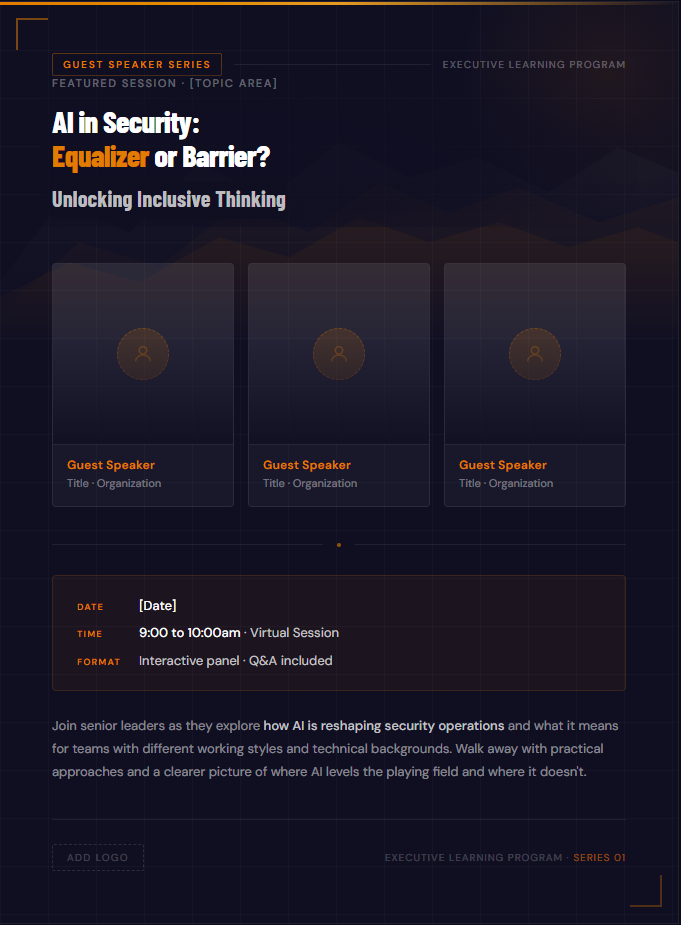
Executive communication template designed for a senior employee development program guest speaker series. Sample shown to demonstrate visual design approach for executive audiences.
VISA Assessor Enablement · Amazon
Building this program required working across two distinct stakeholder groups who rarely spoke the same language. Internally, I partnered with program managers and compliance leads to understand what inconsistency in assessor findings was actually costing the organization - in audit cycle time, in downstream rework, and in the credibility of findings when they reached decision-makers. Externally, I worked directly with assessors across partner sites to surface where ambiguity lived: which terminology meant different things to different teams, which documentation expectations were assumed rather than stated, and which parts of the process were being interpreted rather than executed consistently.
That dual-sided discovery shaped every curriculum decision. Rather than building a generic onboarding program, I designed targeted content around the specific gaps those conversations surfaced: shared definitions, calibration exercises, and documentation standards that gave assessors a common frame of reference regardless of which partner site they operated from. Because security standards and audit expectations do not stay static, the program was intentionally built for evolution. Resource links embedded throughout the training pointed to living reference materials rather than static content, so when standards shifted or new guidance emerged, the underlying resources could be updated without requiring a full rebuild of the training itself. This adaptive architecture meant the program stayed current as the regulatory environment changed, reducing maintenance burden while keeping assessors aligned to the most current expectations. The result was a training ecosystem that grew alongside the program it supported rather than becoming outdated the moment it launched.
The core problem wasn't that assessors lacked information, it was that there was no shared standard for what 'good' looked like in an audit finding. Different partner sites were using different language, different thresholds, and different documentation practices, which created downstream inconsistency that slowed every handoff in the audit cycle. In a regulatory context, that kind of standardization isn't a soft skill, it's a risk management function.
Lifebridge Academy
Built a mobile-first digital learning library for at-risk teens in foster care across Georgia, with interactive lessons designed for clarity, engagement, and practical action.
Digital Shadows AI
A self-directed Rise course I designed and built end-to-end to make AI concepts more accessible, practical, and usable for learners.
Technical Program Management Samples
Public-facing Storyline samples tied to technical upskilling and TPM-style learning—showing interactive design, scenario thinking, and applied technical content.
The throughline in my work is not just design. It is the ability to connect business context, technical complexity, and learning execution in a way that people trust.
I thrive on understanding the why behind every challenge before I touch the solution. My best work happens when I can connect business needs, technical realities, and human behavior into one system that actually makes sense.
I'm especially energized by AI, learning technology, and experiences that feel both strategic and intuitive. I like turning complexity into clarity—whether that shows up as a pathway, a content ecosystem, a wiki, or a better way for people to learn on the job.
I also care about the visual layer. Good design earns attention, builds trust, and helps ideas stick, which is why I often end up owning both the architecture and the experience around it.
"A program that only runs while its architect is in the room isn't a program. It's a dependency."
— HOW I THINK ABOUT HANDOFF
Outside of work
When I'm not working, I'm usually deep in the beautiful chaos of life with my three kids and a Saint Bernard. You'll ideally find me in the mountains, traveling, or mid-project on whatever I'm currently building or fixing around the house. I'm a big believer that the best work happens when you're fueled by curiosity, a little adventure, and the common sense to know when to step away and breathe.

"Nikki selflessly devotes her time and talent to not only meet but often exceed our quarterly goals."
It is my honor to write this testimonial for Nikki Rosenvald. As a dedicated member of our Lifebridge Design Team, Nikki has been a critical contributor to our youth learning library—designing, developing, implementing, and managing instructional content, courses, and projects within our online learning platform.
Nikki is a team player who collaborates well, keeps leadership informed, and produces high-quality, engaging content. I am confident she will be a valued asset in any capacity and am happy to recommend her.
Senior Program Manager, Technical Program Manager, Security Awareness Program Manager, or AI Enablement roles. Remote.
Select contract or consulting engagements in curriculum strategy, pathway design, LMS governance, knowledge hubs, or security awareness.
Most recent Amazon work is confidential by policy — which is standard at enterprise scale. What I can walk through live: the strategic questions I started with, the analysis that shaped the design, the stakeholder decisions I navigated, and the outcomes the programs produced. The thinking is fully shareable even when the artifacts aren't.
If you need someone who can connect strategy, execution, technical context, and polished learner experience, I'd love to hear what you're building.